


Cloud Migration in the UAE: What Most Businesses Get Wrong Before They Move
Picture the scene. A senior leadership meeting somewhere in Dubai. Someone usually the CEO, sometimes the CFO says the words: ‘We should move everything to the cloud.’
The IT manager nods. The finance director asks about cost savings. The operations director asks about downtime. And within a few weeks, a migration project is underway driven by the right instinct but often without the preparation that determines whether it succeeds or becomes an expensive and disruptive lesson.
Cloud migration, done well, genuinely transforms how a UAE business operates reducing infrastructure costs, improving scalability, enabling remote work, and positioning the organisation for the kind of agility that modern business demands. Done poorly, it creates a new set of problems that can take years to untangle.
The difference between the two is almost never budget. It is preparation. And the mistakes that derail cloud migrations in the UAE are consistent, predictable, and entirely avoidable.
Why Cloud Migration Is More Complex in the UAE Than It Appears
The UAE has a unique set of considerations that make cloud migration more nuanced than the global playbook suggests and ignoring them is where many businesses come unstuck.
Data sovereignty and residency
The UAE has specific requirements around where certain categories of data can be stored and processed. Financial data, healthcare records, government-related information, and personally identifiable data may be subject to residency requirements that restrict storage outside the country or region. Businesses that migrate without mapping their data against these obligations can find themselves in a compliance position they did not anticipate.
The good news is that major cloud providers — Microsoft Azure, AWS, and Google Cloud all have UAE and broader GCC data centre presence. But the architecture needs to be deliberately designed around residency requirements, not retrofitted afterwards.
Connectivity and latency
Cloud performance is only as good as the network connecting your business to it. In the UAE, where many businesses operate across multiple sites — head office, warehouse, retail locations, remote workers the connectivity architecture underpinning a cloud migration matters enormously. Businesses that migrate workloads without addressing their network infrastructure often find that cloud performance disappoints, not because the cloud is the problem, but because the pipe connecting to it is.
Regulatory environment
Businesses operating in regulated sectors — financial services, healthcare, government supply chain face specific requirements from the Central Bank of UAE, the Dubai Health Authority, the UAE Cybersecurity Council, and sector-specific regulators. Cloud architecture in these environments needs to be compliant by design, not compliance-reviewed after deployment.
Cloud migration in the UAE is not just a technology decision. It is a data governance, compliance, and network architecture decision that happens to involve technology. Treating it purely as an IT project is the first mistake many businesses make.
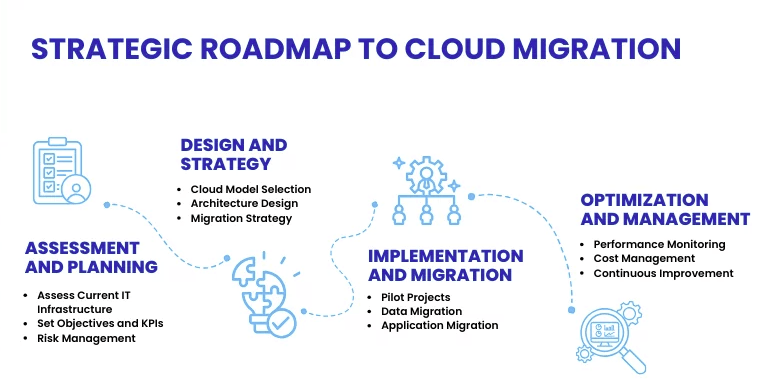
The Six Most Common Cloud Migration Mistakes Businesses Make
These are not theoretical risks. They are the consistent findings from cloud migrations across that cause projects to overrun, budgets to blow out, and post-migration performance to disappoint.
| Common Mistake | Why It Matters |
| Migrating without a security assessment | Moving vulnerabilities from on-premise into the cloud amplifies risk not eliminates it. A clean vulnerability assessment before migration is essential. |
| No data classification before migration | Not all data belongs in the cloud. Sensitive data, regulated data, and operationally critical data each need different treatment. Migrating everything without classification creates compliance and performance problems. |
| Underestimating connectivity requirements | Cloud performance depends heavily on network architecture. Businesses that migrate workloads without upgrading their connectivity infrastructure often find cloud performance disappoints. |
| Ignoring application compatibility | Legacy applications built for on-premise environments do not always behave predictably in the cloud. Compatibility assessment before migration prevents costly surprises post-cutover. |
| No hybrid strategy | Full cloud migration is not always the right answer. Many UAE businesses operate most effectively in a hybrid model cloud for scalability, on-premise for latency-sensitive or regulated workloads. |
| Treating migration as a one-time project | Cloud is not a destination it is an ongoing operational model. Without continuous optimization of cost, performance, and security, cloud environments drift into inefficiency quickly. |
Moving vulnerabilities from on-premise into the cloud amplifies risk, not eliminates it. A clean
vulnerability assessment
before migration is essential.
The security point deserves particular emphasis. Moving to the cloud does not eliminate your on-premise vulnerabilities — it extends them into a new environment. A vulnerability assessment before migration is one of the highest-value steps any UAE business can take. We covered the full process in our previous post on VAPT.
Choosing the Right Cloud Model for Your Business
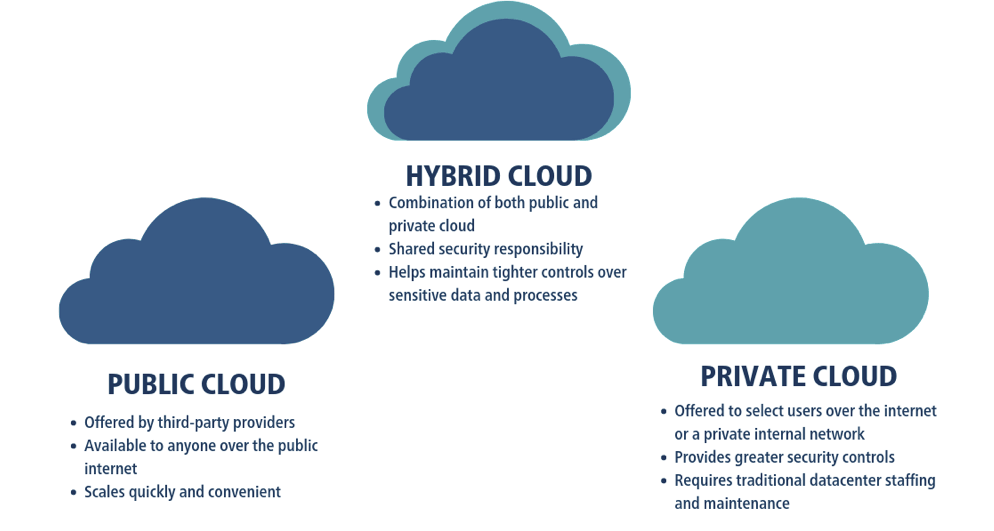
One of the most consequential decisions in any cloud migration is the choice of model. Not every workload belongs in the public cloud, and not every business is ready for full cloud migration. Here is a straightforward comparison of the options most relevant to UAE businesses:
| Model | Examples | Strengths | Considerations for UAE |
| Public Cloud | Microsoft Azure, AWS, Google Cloud | Scalability, cost flexibility, global reach | Shared infrastructure data sovereignty considerations apply in UAE |
| Private Cloud | Dedicated on-premise or hosted environment | Full control, data sovereignty, predictable performance | Higher upfront cost, requires internal management capability |
| Hybrid Cloud | Combination of public and private | Flexibility — right workload in the right environment | Requires strong integration architecture to manage effectively |
| Multi-Cloud | Multiple public cloud providers | Avoids vendor lock-in, best-of-breed services | Operational complexity increases significantly |
Strengths: Scalability, cost flexibility, global reach
Considerations for UAE: Shared infrastructure — data sovereignty considerations apply
Strengths: Full control, data sovereignty, predictable performance
Considerations for UAE: Higher upfront cost, requires internal management capability
Strengths: Flexibility — right workload in the right environment
Considerations for UAE: Requires strong integration architecture to manage effectively
Strengths: Avoids vendor lock-in, best-of-breed services
Considerations for UAE: Operational complexity increases significantly
For most UAE businesses particularly those in regulated sectors or with data sovereignty obligations a hybrid cloud model offers the most practical balance of flexibility, control, and compliance. The key is a clearly defined strategy for which workloads go where, and why.
The Role of Enterprise Applications in Cloud Migration
Cloud migration is not just about infrastructure. For businesses running enterprise applications — ERP systems, CRM platforms, business intelligence tools, collaboration platforms — migration planning needs to account for how each application behaves in a cloud environment.
Legacy application compatibility
Applications built for on-premise environments do not always translate cleanly to the cloud. Some require re-platforming rebuilding for cloud-native architecture. Others can be lifted and shifted with minimal modification. And some are genuinely better left on-premise, at least in the short term. Understanding which category each application falls into before migration begins is essential.
Data and business intelligence
Cloud migration creates a significant opportunity to modernise how a business uses its data. Tools like Microsoft Power BI which integrates natively with Azure cloud infrastructure can transform raw operational data into real-time business intelligence that was previously unavailable or prohibitively complex to produce. Businesses that treat migration as purely an infrastructure exercise often miss this opportunity entirely.
Integration architecture
In a hybrid cloud environment, the integration between cloud and on-premise systems is where complexity lives. APIs, data pipelines, identity management, and network connectivity all need to be architected deliberately. Businesses that underinvest in integration architecture find that their hybrid environment creates more operational friction than the on-premise setup it replaced
The businesses that get the most value from cloud migration are the ones that treat it as a business transformation project not an IT infrastructure project. The technology is the enabler. The value comes from what you do with it.
Cloud Cost Management: The Surprise That Catches Most Businesses
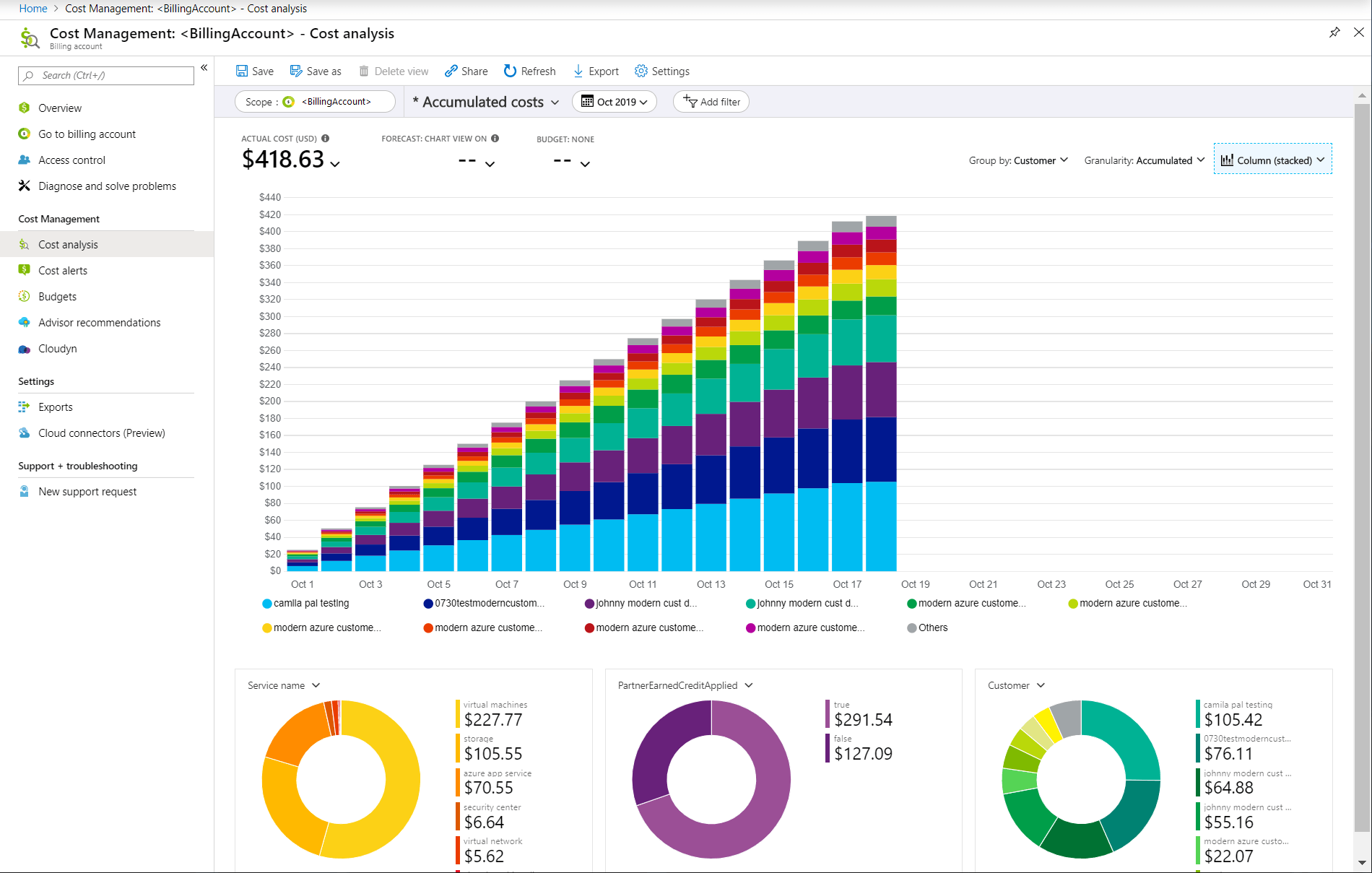
One of the most consistent surprises in cloud migration is cost. The promise of cloud economics pay only for what you use, reduce capital expenditure, scale up and down as needed is real. But it requires active management to deliver.
Businesses that migrate to the cloud without a cost governance framework in place often find their monthly cloud bill growing in ways they did not anticipate. The reasons are predictable:
• Over-provisioned resources: Virtual machines and storage sized for peak capacity and left running at that scale permanently
• Egress fees: The cost of moving data out of the cloud, which is often underestimated in pre-migration modelling
• Redundant services: Cloud environments accumulate unused resources quickly if there is no regular review process
• Licensing complexity: Software licensing in cloud environments can be significantly more complex than on-premise, particularly for Microsoft products
Effective cloud cost management requires the same discipline as any operational budget, regular review, clear ownership, and a framework for making decisions about resource allocation. The businesses that manage cloud costs well treat it as a continuous operational function, not a one-time setup task.
Your Cloud Migration Readiness Checklist
Before your next cloud migration conversation, whether you are starting from scratch or reviewing a migration already underway use this checklist to assess where you actually stand:
| Readiness Area | The question to answer honestly |
| Application inventory | Do you have a complete, current list of every application in your environment and its cloud readiness? |
| Data classification | Has your data been categorised by sensitivity, regulatory status, and operational criticality? |
| Security assessment | Have you run a vulnerability assessment of your current environment before migration begins? |
| Network readiness | Is your connectivity infrastructure capable of supporting cloud workload performance requirements? |
| Compliance mapping | Have you mapped your regulated data and workloads against UAE data residency and sovereignty requirements? |
| Cost modelling | Have you modelled total cloud costs including licensing, egress fees, and ongoing management — not just compute? |
| Hybrid strategy defined | Have you identified which workloads belong in the cloud and which stay on-premise, and why? |
| Post-migration optimization | Is there a plan for continuous monitoring and optimization of cost, performance, and security after go-live? |
If you cannot answer yes to every question on this list, you have a prioritised starting point. The goal is not to answer yes before you start it is to answer yes before you go live.
The Bottom Line
Cloud migration is one of the most significant IT decisions a UAE business makes, and one of the most consequential when it goes wrong. The organisations that navigate it successfully are not the ones with the biggest budgets. They are the ones that invest in preparation, treat security and compliance as foundational rather than afterthoughts, and approach migration as a business transformation rather than a technology project.
The cloud is not a destination. It is an operational model and like any operational model, it rewards the businesses that run it deliberately.

If your organisation is planning a migration, reviewing one already underway, or simply trying to get more value from an existing cloud environment the conversation is worth having before the next senior leadership meeting where someone says ‘we should move everything to the cloud.’
Plan Your Cloud Migration with Candor
Candor works with UAE businesses across the full cloud journey from readiness assessment and migration planning to hybrid architecture design, ongoing optimization, and enterprise application integration. We help you move to the cloud in a way that is secure, cost-effective, and built for how your business actually operates.
👉 Get in touch with our team today.